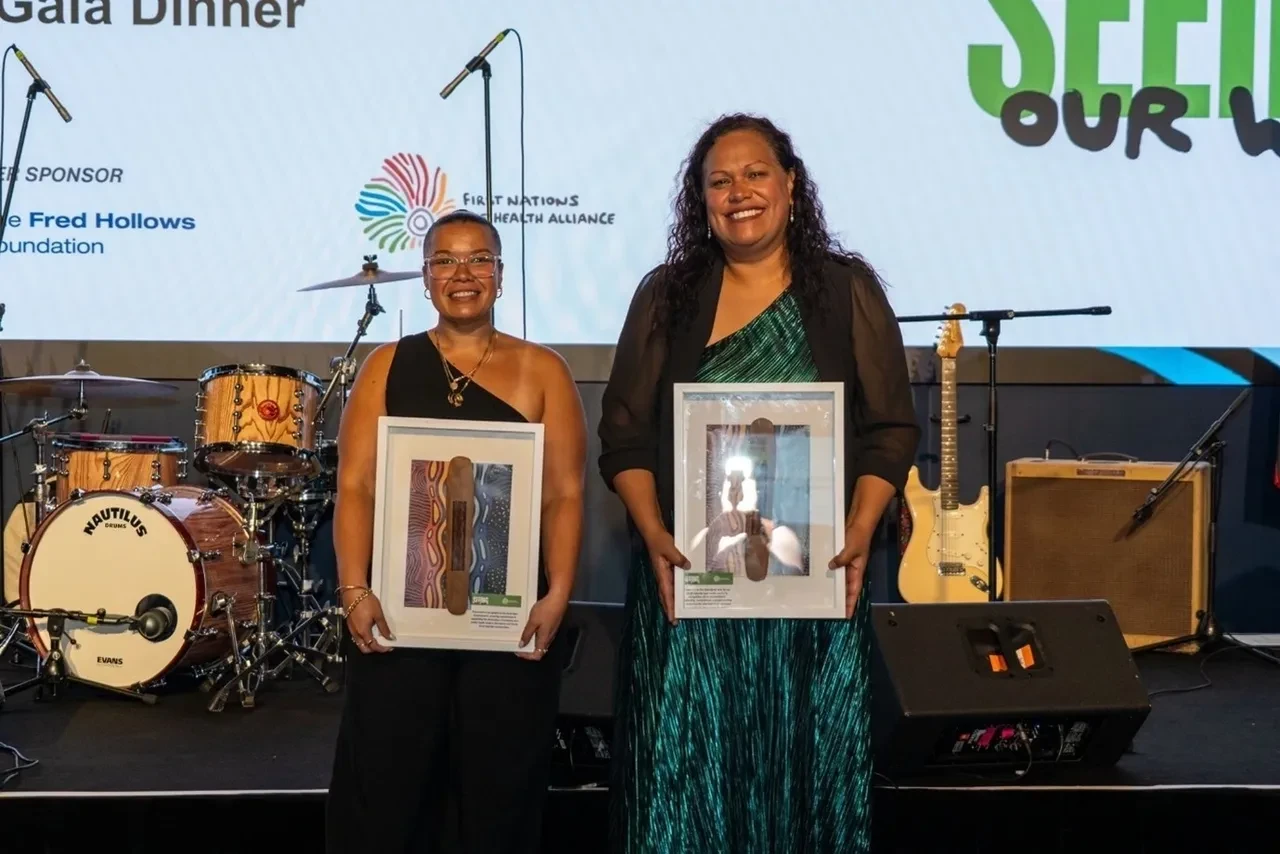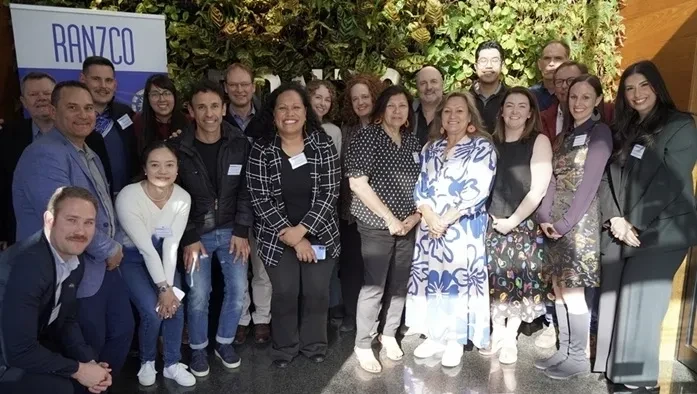
Facilitators and participants from Aboriginal and Torres Strait Islander Models of Collaborative Care Workshop, Saturday 6 of September 2025, on Gadigal Country, Warrane, at the RANZCO office 94 98 Chalmers St, Surry Hills, Sydney, NSW
FNEHA in partnership with RANZCO publish workshop report on Aboriginal and Torres Strait Islander models of collaborative care in Ophthalmology.
In Australia, eye health and vision problems are the most common chronic conditions among Aboriginal and Torres Strait Islander peoples, who experience preventable vision loss at three times the rate of non-Indigenous Australians, 94% of which is avoidable with timely care.
To address these inequalities, Aboriginal and Torres Strait Islander models of collaborative care in the Australian health system must align with the national Aboriginal and Torres Strait Islander policy landscape by embedding Aboriginal and Torres Strait Islander leadership, knowledge, and organisations at the centre of collaborative care design and delivery. Accountability must be grounded in Aboriginal and Torres Strait Islander worldviews, with commitments to anti-racist practice, workforce sustainability, and genuine partnerships with community-controlled health services.
To advance this goal, The Royal Australian and New Zealand College of Ophthalmologists (RANZCO) engaged the First Nations Eye Health Alliance (FNEHA) to consult with RANZCO members and staff and other relevant stakeholders in broader Aboriginal and Torres Strait Islander health (with a focus on Aboriginal and Torres Strait Islander people in eye care) to identify up to two key priorities that can be advanced by RANZCO to improve collaborative care within ophthalmology.
This workshop was made possible through educational grants from Roche and Bayer.
A workshop was held on Saturday 6 September 2025, on Gadigal Country, Warrane (Surry Hills, Sydney, NSW) and attended by 22 participants with representation across the eye care and Aboriginal and Torres Strait Islander health and wellbeing sector.
The workshop identified one top priority and two equally important second-tier priorities to strengthen Aboriginal and Torres Strait Islander models of collaborative care. They include:
- Highest priority is to embed Aboriginal and Torres Strait Islander voices and perspectives in RANZCO's decision-making processes.
- Redevelopment of RANZCO collaborative care definition to reflect the needs of Aboriginal and Torres Strait Islander people.
- Adoption of Aboriginal and Torres Strait Islander research methodologies ensuring commissioned research aligns with Aboriginal and Torres Strait Islander people's priorities.